
Estimated reading time: 5 minutes
Table of contents
When you need reliable, large-scale heating for construction sites, events, or industrial applications, choosing the right heater matters. One term you’ll often hear is “indirect fired heater”… but what does it mean, and how does it compare to a direct fired heater? In this guide, we’ll break it down, explain the differences, and show why our IDF range is a smart choice for safe heating.
What Is an Indirect Fired Heater?
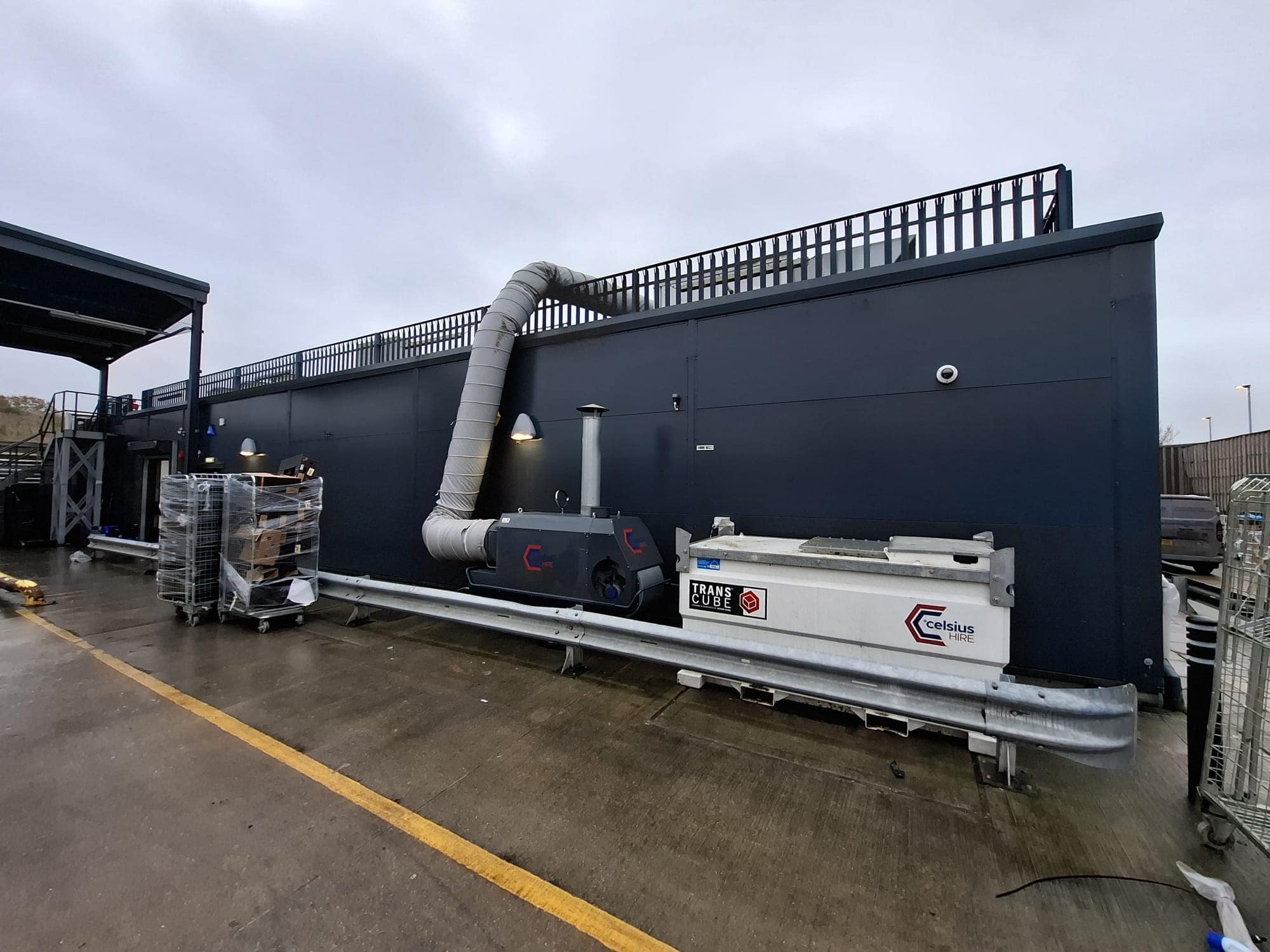
An indirect fired heater is a heating system that warms air without exposing it to combustion gases. Here’s how it works:
- Fuel (usually diesel or gas) is burned inside a sealed combustion chamber.
- Heat from the chamber transfers to a heat exchanger.
- Warm air is then blown into the space via ducting.
Because the combustion process is isolated air, making indirect fired heaters ideal for enclosed spaces or areas where air quality is critical.
Direct vs Indirect Fired Heaters: What’s the Difference?
Both heater types use fuel to generate heat, but the key difference lies in air quality and application:
| Feature | Direct Fired Heater | Indirect Fired Heater |
| Size & Footprint | Compact design, easy to position in tight spaces | Larger footprint due to heat exchanger and flue system |
| Efficiency | Higher fuel efficiency | Slightly lower due to heat exchanger |
| Applications | Well-ventilated spaces (e.g., open construction sites) | Enclosed spaces, events, food production |
| Safety | Requires ventilation to avoid fumes | Safer for occupied spaces |
If you’re heating a marquee, warehouse, or any area where people will be present, indirect fired heaters are the clear winner.
Why Choose a 150kW Indirect Fired Heater?
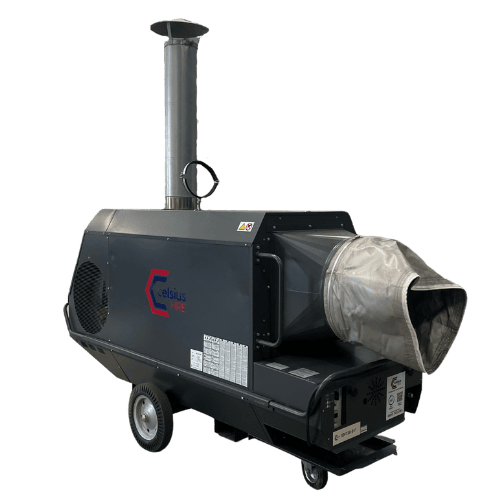
The 150kW Indirect Fired Heater is a powerhouse for large-scale heating. Here’s why it stands out:
- Safe: Perfect for sensitive environments like healthcare, food production, or events.
- High Output: 150kW of heat ensures rapid temperature control for big spaces.
- Flexible Fuel Options: Typically runs on diesel, making it easy to deploy on most sites.
- Ducting Capability: Direct warm air exactly where you need it, even across multiple zones.
To keep your heater running efficiently throughout the hire period, we also offer a comprehensive fuel management service; ensuring timely deliveries and uninterrupted heating.
Benefits of Indirect Fired Heating

Easy to Move
On wheels for quick repositioning wherever heat is needed.

Versatility
Works in enclosed or semi-enclosed spaces.


Scalability
Combine units for larger spaces or critical projects.
Common Applications
- Construction Sites: Keep projects on schedule during winter.
- Events and Marquees: Comfortable warm air for guests.
- Industrial Processes: Maintain temperature for production lines.
- Hospital and Healthcare: Rapid response for breakdowns or seasonal demand.
How to Size an Indirect Fired Heater
Choosing the right heater size depends on:
- Space Volume: Measure cubic metres.
- Insulation Level: Poor insulation requires more power.
- Desired Temperature Rise: Higher temperature increase = more kW.
For large spaces or critical applications, the 150kW model offers the perfect balance of power and efficiency.
Frequently Asked Questions
Yes, for the combustion process
While slightly less efficient than direct fired heaters, the safety benefits outweigh the difference
Yes, they provide dry heat, making them suitable for drying materials or spaces.
Learn More About Temporary Heating Solutions
This solution is a go-to choice for safe, and effective heating in enclosed or sensitive environments. Our range of Indirect Fired Heater deliver the power and reliability you need for large-scale projects—without compromising on air quality or safety.